How to play the 15 puzzle
- The 15 puzzle is a sliding puzzle with tiles numbered 1 to 15 and one empty space. Slide the tiles into the empty space until they read 1 to 15 in order from the top left, with the empty space in the bottom right corner.
- Tap a tile in the same row or column as the empty space and every tile between them slides over together. Each tile that moves one space counts as one move.
- Choose from four sizes: 3×3 (the 8 puzzle), 4×4 (the 15 puzzle), 5×5 (the 24 puzzle) and 6×6 (the 35 puzzle). New to sliding puzzles? Start with 3×3.
- A tile in its correct place turns green and gets a dot under its number.
- Tap “Picture” to play with a picture instead of numbers: Mt. Fuji, a cat, the sea or fireworks. The puzzle and moves are the same. The small number on each piece shows its order, and it turns into a green circle when the piece is in place. Finish the puzzle and the whole picture comes together.
- Stuck? Tap “Hint” and the next tile to move gets a yellow frame. On 3×3 it follows a shortest solution; on bigger boards it follows the method below.
- The clock starts with your first move. Your best time without hints is saved for each size.
- The daily puzzle is one puzzle per size each day, the same for everyone. Solve it every day to build a streak.
- On a computer, the arrow keys move the tiles next to the empty space (← slides the tile on the right of the empty space into it). Ctrl+Z undoes a move. If you close the page, your puzzle is saved so you can pick up where you left off.
How to solve the 15 puzzle
You don’t need luck or a computer. Solve the board one row and one column at a time, and you can finish any size:
- Solve the top row. Put 1, then 2 in place. For the last two tiles, don’t slide 3 and 4 in one by one: move 4 into 3’s spot and bring 3 right below it. Then walk the empty space to the top right corner and slide 4 right and 3 up: both drop into place.
- Solve the left column. Put 5 in place. For 9 and 13, do the same trick sideways: move 13 into 9’s spot and bring 9 right next to it. Then walk the empty space to the bottom left corner and slide 13 down and 9 left.
- Solve the last 3×3. What’s left is the 8 puzzle. Solve its top row (6, 7, 8) and left column (10, 14) the same way, then circle the last three tiles around the empty space until they line up.
- Move the empty space, not the tile. To move a tile one step, first walk the empty space around to the side the tile should go, without disturbing the tiles you’ve already solved.
- Row ended up as 1 2 4 3? Two tiles can’t swap places on their own. Move 3 out of the row and do the drop-in again. The same goes if 3 slips into the top right corner while you bring 4 over.
- On 5×5 and 6×6, keep solving the top row and the left column until a 3×3 is left. Picture puzzles work the same way: follow the small numbers.
Can every 15 puzzle be solved?
No. Exactly half of all arrangements can never be solved. The famous one is the finished board with only 14 and 15 swapped: no amount of sliding fixes it. This game only deals arrangements that can be solved. Every solvable 3×3 can be finished in 31 moves or fewer, and every 4×4 in 80 moves or fewer.
About the 15 puzzle
The 15 puzzle (also called the fifteen puzzle or the Game of Fifteen) became a huge craze in the United States around 1880, and it is still the best-known sliding puzzle in the world. For a sliding puzzle with blocks of different sizes, try Klotski.
More games
 KlotskiSlide blocks to free the big one—daily puzzle too
 Tower of HanoiMove every disk to the right peg. Daily puzzles too
 Pentomino PuzzleFill boxes with pentominoes. Daily puzzles
 Lights OutTurn all lights off—each tap flips its neighbors
 River Crossing PuzzleWolf, goat and cabbage, the family puzzle and more
 8 Queens PuzzlePlace 8 queens so none attack. Find all 92
 Water Jug PuzzlePour between jugs to measure exact amounts
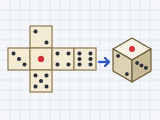 Cube NetsDoes the net fold into a cube? Fold all 11 nets in 3D